


Are stainless steel hoses magnetic?
As a supplier of Stainless Steel Hoses, I often encounter questions from customers regarding the magnetic properties of these products. This topic is not only interesting but also crucial for many applications where magnetic interference or compatibility can be a significant factor. In this blog post, I will delve into the science behind the magnetism of stainless steel hoses, explore the factors that influence it, and provide practical insights for those in need of these products.

Understanding Stainless Steel
Stainless steel is an alloy primarily composed of iron, chromium, and nickel, with other elements added in smaller quantities to enhance specific properties. The addition of chromium forms a thin, protective oxide layer on the surface of the steel, which gives it its characteristic corrosion resistance. Depending on the composition and processing, stainless steel can be classified into different types, each with distinct properties, including magnetism.
The three main types of stainless steel relevant to our discussion are austenitic, ferritic, and martensitic. Austenitic stainless steel is the most common type used in stainless steel hoses. It typically contains high levels of nickel and chromium, which give it excellent corrosion resistance and ductility. Ferritic stainless steel, on the other hand, has a lower nickel content and a higher chromium content, making it more magnetic. Martensitic stainless steel is similar to ferritic but can be hardened through heat treatment, and it is also magnetic.
Magnetism in Stainless Steel Hoses
The magnetic properties of stainless steel hoses depend largely on the type of stainless steel used in their construction. Austenitic stainless steel hoses, which are widely used in various industries due to their corrosion resistance and flexibility, are generally non - magnetic or only slightly magnetic. This is because the crystal structure of austenitic stainless steel is face - centered cubic (FCC), which does not allow for easy alignment of magnetic domains.
However, it is important to note that some austenitic stainless steel hoses may exhibit a small degree of magnetism. This can be due to several factors. One common cause is cold working. When austenitic stainless steel is cold worked, such as during the manufacturing process of hoses, some of the austenite can transform into martensite, a magnetic phase. The more severe the cold working, the greater the amount of martensite formed and the stronger the magnetic response.
Another factor that can affect the magnetism of stainless steel hoses is the presence of impurities or inclusions. If the stainless steel contains small amounts of ferrite or other magnetic phases as a result of improper melting or processing, the hose may be more magnetic than expected. Additionally, the use of magnetic tooling during manufacturing can also introduce a small amount of magnetism to the hoses.
Ferritic and martensitic stainless steel hoses, as mentioned earlier, are magnetic. Ferritic stainless steel has a body - centered cubic (BCC) crystal structure, which allows for easy alignment of magnetic domains. Martensitic stainless steel, which can be hardened through heat treatment, also has a magnetic structure. These types of hoses are less commonly used than austenitic hoses but may be preferred in applications where magnetic properties are required or where cost is a major consideration.
Applications and Considerations
The magnetic properties of stainless steel hoses have important implications for their applications. In industries such as food and beverage, pharmaceuticals, and electronics, non - magnetic hoses are often preferred to avoid any potential contamination or interference with sensitive equipment. For example, in the electronics industry, magnetic hoses could attract metal particles or interfere with the operation of magnetic sensors.
On the other hand, in some applications, the magnetic properties of stainless steel hoses can be an advantage. In the mining and metal processing industries, magnetic hoses can be used to separate magnetic materials from non - magnetic ones. They can also be used in magnetic filtration systems to remove ferrous contaminants from fluids.
When selecting stainless steel hoses, it is essential to consider the magnetic requirements of the application. If a non - magnetic hose is needed, it is advisable to choose a high - quality austenitic stainless steel hose and ensure that it has been properly processed to minimize the formation of magnetic phases. It is also a good idea to test the hose for magnetism before installation.
Our Product Offerings
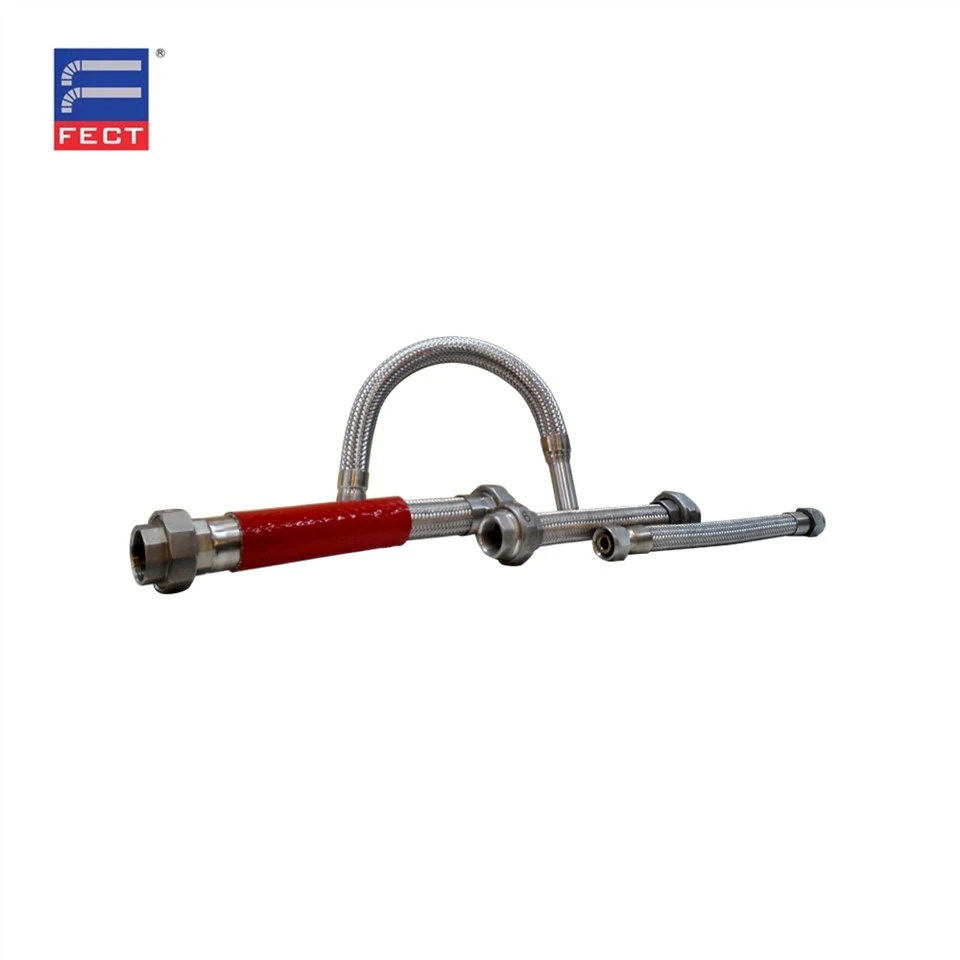
As a supplier of Stainless Steel Hoses, we offer a wide range of products to meet different customer needs. Our Stainless Steel Hoses are made from high - quality austenitic stainless steel, which provides excellent corrosion resistance and flexibility. We take great care in the manufacturing process to ensure that our hoses have minimal magnetic properties, making them suitable for applications where non - magnetism is crucial.
In addition to our standard stainless steel hoses, we also offer Pull Rod Type Quick Joint Connctor and Pull Rod Type Quick Joint Connector Steel Metal Hose. These products are designed for easy installation and reliable performance, and they are available in a variety of sizes and configurations to meet different application requirements.
Conclusion
In conclusion, the magnetism of stainless steel hoses depends on the type of stainless steel used and the manufacturing process. Austenitic stainless steel hoses are generally non - magnetic or slightly magnetic, while ferritic and martensitic stainless steel hoses are magnetic. Understanding the magnetic properties of stainless steel hoses is crucial for selecting the right product for your application.
If you are in need of high - quality stainless steel hoses, we are here to help. Our team of experts can provide you with detailed information about our products and assist you in choosing the most suitable solution for your specific requirements. Whether you need non - magnetic hoses for sensitive applications or magnetic hoses for specialized processes, we have the products and expertise to meet your needs. Contact us today to start a discussion about your stainless steel hose requirements and explore the possibilities of working together.
References
- ASM Handbook, Volume 1: Properties and Selection: Irons, Steels, and High - Performance Alloys. ASM International.
- Stainless Steel: A Technical Guide. The Nickel Institute.


