


What is the deflection limit of a steel flat pallet under load?
As a supplier of steel flat pallets, I often encounter questions from customers regarding the performance and safety of our products. One of the most frequently asked questions is about the deflection limit of a steel flat pallet under load. In this blog post, I will delve into this topic to provide a comprehensive understanding of what deflection limits are, why they matter, and how they apply to our steel flat pallets.
Understanding Deflection
Deflection refers to the degree to which a structural element, such as a steel flat pallet, bends or deforms when subjected to a load. When a pallet is loaded with goods, the weight causes it to flex. The amount of flexing is the deflection. Measuring deflection is crucial as it helps determine the structural integrity and safety of the pallet during use.
In the context of steel flat pallets, deflection is typically measured in millimeters or inches. A small amount of deflection is normal and expected, as steel, like all materials, has some elasticity. However, excessive deflection can lead to several problems, including damage to the pallet, instability of the load, and potential safety hazards in a warehouse or transportation environment.
Importance of Deflection Limits
Deflection limits are set to ensure that steel flat pallets can safely support the intended loads without experiencing excessive deformation. These limits are established based on industry standards and engineering calculations to prevent failures that could result in product damage, injuries, or disruptions in the supply chain.
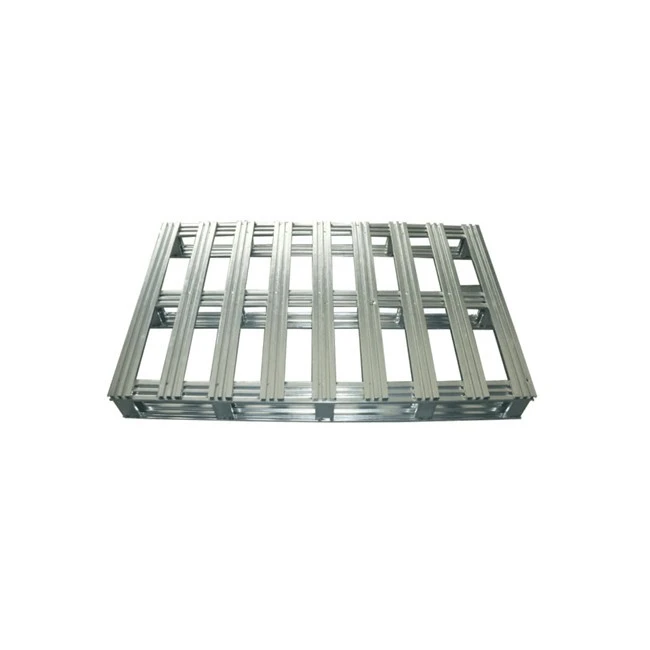

For instance, if a pallet deflects too much, the load on it may become unstable, increasing the risk of items shifting or falling during handling, storage, or transit. This can lead to damaged goods, which is costly for businesses. Additionally, excessive deflection can weaken the pallet over time, reducing its lifespan and increasing the frequency of replacements.
Factors Affecting Deflection
Several factors influence the deflection of a steel flat pallet under load:
- Pallet Design: The design of the pallet, including its shape, size, and the arrangement of its structural components, plays a significant role in determining its deflection characteristics. For example, pallets with a more robust frame and additional cross - members are generally more resistant to deflection.
- Steel Quality: The quality of the steel used in the pallet's construction is crucial. Higher - grade steel with better mechanical properties, such as higher yield strength and modulus of elasticity, will typically result in less deflection under the same load.
- Load Distribution: How the load is distributed on the pallet also affects deflection. A concentrated load in one area will cause more deflection than a evenly distributed load. Therefore, it is important to properly distribute the weight of the goods on the pallet to minimize deflection.
- Loading Conditions: The type of loading, whether it is static (stationary) or dynamic (during movement), can impact deflection. Dynamic loads, such as those experienced during forklift handling or transportation vibrations, can cause higher levels of deflection compared to static loads.
Industry Standards for Deflection Limits
Different industries may have their own standards for deflection limits of steel flat pallets. In general, for most industrial applications, the maximum allowable deflection is often specified as a fraction of the pallet's span. For example, a common standard might state that the deflection should not exceed 1/360 of the span length under the rated load.
Let's say we have a steel flat pallet with a span of 1200 mm. According to the 1/360 rule, the maximum allowable deflection under the rated load would be 1200/360 = 3.33 mm. It is important for us as a supplier to ensure that our pallets meet or exceed these industry standards to provide a safe and reliable product to our customers.
Our Steel Flat Pallets and Deflection Limits
At our company, we take great care in designing and manufacturing steel flat pallets that comply with strict deflection limits. Our engineers use advanced design software to optimize the pallet's structure, taking into account all the factors that affect deflection. We source high - quality steel from reputable suppliers to ensure the pallets have excellent mechanical properties.
Moreover, we conduct rigorous testing on our pallets to verify their performance under different load conditions. This includes both static and dynamic load testing in our in - house testing facilities. By doing so, we can guarantee that our steel flat pallets will not only meet but often exceed industry standards for deflection.
If you are interested in our Metal Pallets with Side, they are designed with the same high - quality standards in mind. These pallets are ideal for applications where additional side support is required, and they also adhere to strict deflection limits.
How We Ensure Pallet Performance
To ensure that our steel flat pallets perform well under load and stay within the deflection limits, we follow a comprehensive quality control process:
- Material Inspection: We carefully inspect all incoming steel materials to ensure they meet our quality requirements. This includes checking the chemical composition and mechanical properties of the steel.
- Manufacturing Precision: Our manufacturing processes are highly precise, with strict control over welding quality, dimensions, and surface finish. This ensures that each pallet is consistent in its performance.
- Final Testing: Before leaving our factory, every pallet undergoes a series of tests, including load testing and deflection measurement. Only pallets that pass these tests are approved for shipment.
Contact Us for Your Pallet Needs
If you are in the market for high - quality steel flat pallets that meet strict deflection limits, look no further. We are committed to providing you with reliable and durable pallets that will meet your specific requirements. Whether you need pallets for light - duty or heavy - duty applications, we have the expertise and resources to deliver the right solution.
Contact us today to discuss your pallet needs and start a conversation about how our products can enhance the efficiency and safety of your supply chain. Our team of experts is ready to assist you with product selection, customization, and any technical questions you may have.
References
- ASTM International. (20XX). Standard specifications for steel pallets.
- European Pallet Association. (20XX). Guidelines for pallet design and performance.
- Engineering textbooks on structural mechanics and materials science.


