


Hey there! As a lifting sling supplier, I often get asked about the minimum bend radius for wire rope lifting slings. It's a crucial topic because getting it wrong can lead to all sorts of problems, from reduced sling life to outright failure. So, let's dig into what the minimum bend radius is and why it matters.
What is the Minimum Bend Radius?
The minimum bend radius is the smallest radius a wire rope lifting sling can be bent around without causing significant damage or reducing its strength. When a wire rope is bent, the wires on the outside of the bend are stretched, while the wires on the inside are compressed. If the bend is too sharp, these stresses can cause the wires to break or fatigue prematurely, weakening the sling.
Think of it like bending a paperclip. If you bend it gently, it'll hold its shape. But if you bend it too sharply, it'll break. The same principle applies to wire rope slings.
Why Does the Minimum Bend Radius Matter?
There are a few reasons why the minimum bend radius is so important. First and foremost, it affects the strength of the sling. When a wire rope is bent beyond its minimum bend radius, the stress on the wires increases significantly. This can lead to wire breakage, which reduces the sling's capacity to lift heavy loads.
Secondly, it impacts the lifespan of the sling. Excessive bending can cause the wires to wear out faster, leading to premature failure. This means you'll have to replace the sling more often, which can be costly in the long run.
Finally, it's a safety issue. A damaged or weakened sling is more likely to fail during a lift, which can result in serious injuries or even fatalities. By following the recommended minimum bend radius, you can ensure that your slings are safe to use and can handle the loads they're designed for.
Factors Affecting the Minimum Bend Radius
The minimum bend radius of a wire rope lifting sling isn't a one-size-fits-all number. It depends on several factors, including:
- Rope Construction: Different types of wire rope have different minimum bend radii. For example, a rope with a more flexible construction, such as a 6x37 or 8x19 rope, will have a smaller minimum bend radius than a less flexible rope, like a 6x7 rope.
- Sling Design: The way the sling is made also affects the minimum bend radius. For instance, a sling with a larger diameter or a different type of end fitting may require a larger bend radius.
- Load Type: The type of load being lifted can impact the minimum bend radius. A sharp-edged load, for example, can cause more stress on the rope than a smooth load, so a larger bend radius may be needed.
- Operating Conditions: The environment in which the sling is used can also play a role. Extreme temperatures, corrosive chemicals, or abrasive surfaces can all affect the rope's performance and may require a larger minimum bend radius.
How to Determine the Minimum Bend Radius
So, how do you figure out the minimum bend radius for your wire rope lifting sling? The best way is to refer to the manufacturer's specifications. Most reputable manufacturers will provide guidelines on the minimum bend radius for their slings based on the factors mentioned above.
If you don't have the manufacturer's specifications, you can also use industry standards as a general guide. The American Society of Mechanical Engineers (ASME) B30.9 standard, for example, provides recommendations for the minimum bend radius of wire rope slings.
Here's a simple rule of thumb: as a general guideline, the minimum bend radius for a wire rope lifting sling should be at least 3 to 5 times the diameter of the rope. However, this is just a starting point, and you should always consult the manufacturer's specifications for the most accurate information.
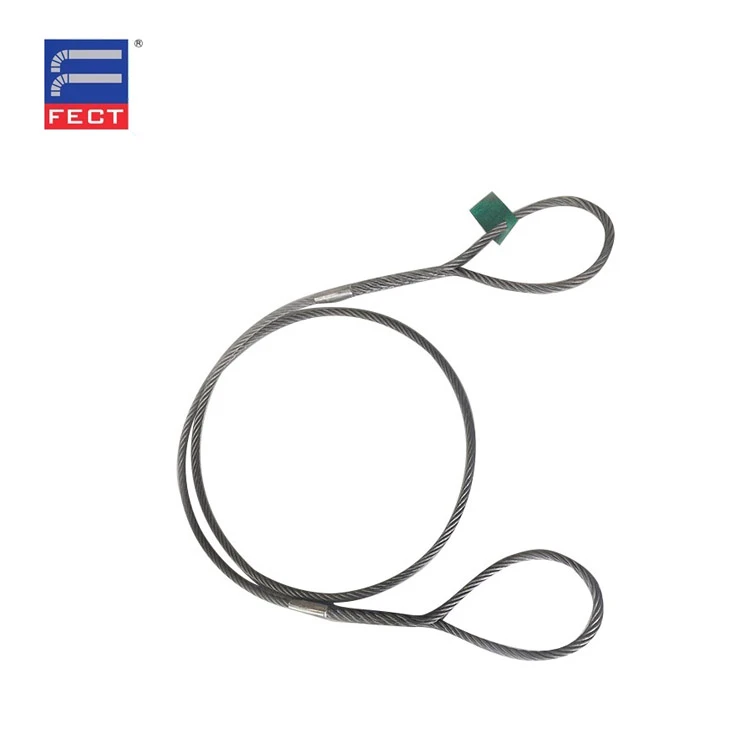

Our Lifting Sling Products
At our company, we offer a wide range of lifting slings to meet your needs. Whether you're looking for Steel Wire Rope Slings for Lifting, Pressed and Spliced Wire Sling, or Stainless Steel Lifting Slings, we've got you covered.
Our slings are made from high-quality materials and are designed to meet or exceed industry standards. We also provide detailed specifications and guidelines for each product, including the minimum bend radius, to ensure that you're using our slings safely and effectively.
Conclusion
In conclusion, the minimum bend radius is a critical factor to consider when using wire rope lifting slings. By understanding what it is, why it matters, and how to determine it, you can ensure that your slings are safe, reliable, and long-lasting.
If you have any questions about our lifting slings or need help choosing the right product for your application, don't hesitate to reach out. We're here to help you make the best decision for your lifting needs. Whether you're a small business or a large industrial operation, we can provide the products and support you need to get the job done safely and efficiently.
So, if you're in the market for high-quality lifting slings, give us a call or send us an email. We'd love to discuss your requirements and help you find the perfect solution.
References
- American Society of Mechanical Engineers (ASME) B30.9 - Slings
- Manufacturer's specifications for wire rope lifting slings


