


What is the weight of an average steel flat pallet? This is a question that I, as a supplier of steel flat pallets, often get asked by our customers. The weight of a steel flat pallet can vary significantly depending on several factors, including its size, thickness, and the specific design features. In this blog post, I'll delve into these aspects to provide a comprehensive understanding of the average weight of steel flat pallets.
Factors Affecting the Weight of Steel Flat Pallets
Size
The dimensions of a steel flat pallet play a crucial role in determining its weight. Larger pallets naturally require more steel material, which in turn increases their weight. For instance, a standard-sized steel flat pallet used in general industrial applications might measure around 48 inches by 40 inches (1219 mm by 1016 mm). A pallet of this size would typically weigh more than a smaller one, say, 36 inches by 36 inches (914 mm by 914 mm).
Thickness of Steel
The thickness of the steel used in the construction of the pallet is another significant factor. Thicker steel provides greater strength and durability but also adds to the overall weight. Pallets designed for heavy-duty applications, such as those used in the automotive or heavy machinery industries, often have a thicker steel gauge. A pallet made with a 10-gauge steel will be heavier than one made with a 12-gauge steel, as the 10-gauge steel is thicker.
Design Features
The design of the steel flat pallet can also impact its weight. Some pallets may have additional features like reinforced edges, crossbars, or sidewalls. For example, Metal Pallets with Side are designed with side structures that not only enhance the pallet's stability but also increase its weight compared to a simple flat pallet without sides.

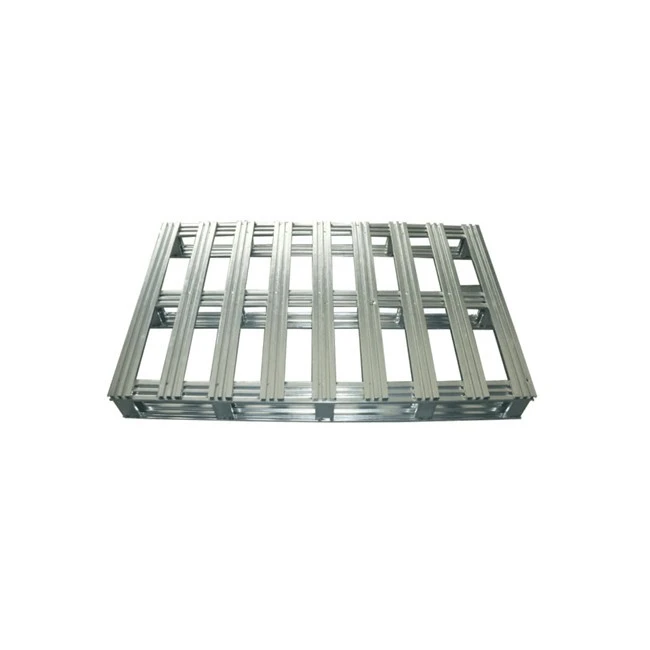
Average Weight Ranges
To give you a better idea of the average weight of steel flat pallets, here are some common weight ranges based on different sizes and applications:
Light-Duty Pallets
Light-duty steel flat pallets are typically used for lighter loads and in applications where portability is important. These pallets usually have a thinner steel gauge and a more basic design. A small light-duty steel flat pallet, around 36 inches by 36 inches, might weigh anywhere from 20 to 30 pounds (9 to 14 kg).
Medium-Duty Pallets
Medium-duty pallets are suitable for a wide range of industrial applications. They are designed to handle moderate loads and are often used in warehouses and distribution centers. A standard 48-inch by 40-inch medium-duty steel flat pallet can weigh between 40 and 60 pounds (18 to 27 kg).
Heavy-Duty Pallets
Heavy-duty steel flat pallets are built to withstand heavy loads and harsh environments. They are commonly used in industries such as manufacturing, automotive, and construction. These pallets have a thicker steel gauge and more robust design features. A 48-inch by 40-inch heavy-duty steel flat pallet can weigh upwards of 80 pounds (36 kg) or more, depending on its specific construction.
Importance of Knowing the Weight
Understanding the weight of a steel flat pallet is essential for several reasons. Firstly, it helps in determining the overall weight capacity of the pallet. By knowing the weight of the pallet itself, you can accurately calculate the maximum load it can safely carry. This is crucial for ensuring the safety of the goods being transported or stored on the pallet.
Secondly, the weight of the pallet affects its handling and transportation. Heavier pallets may require more powerful handling equipment, such as forklifts with a higher lifting capacity. Additionally, the weight of the pallet contributes to the overall weight of the shipment, which can impact shipping costs.
Customization and Weight
At our company, we offer a wide range of customization options for steel flat pallets. This means that the weight of the pallets can be tailored to meet the specific needs of our customers. For example, if a customer requires a pallet with a lower weight for easier handling, we can use a thinner steel gauge or a more lightweight design. On the other hand, if a customer needs a pallet to handle extremely heavy loads, we can increase the thickness of the steel and add reinforced features to ensure its strength and durability.
Conclusion
In conclusion, the weight of an average steel flat pallet can vary widely depending on its size, thickness, and design features. Light-duty pallets are relatively lightweight, while heavy-duty pallets can be quite substantial. Knowing the weight of the pallet is important for determining its load capacity, handling requirements, and shipping costs.
If you're in the market for steel flat pallets and have specific weight or design requirements, we'd love to hear from you. Our team of experts can work with you to design and manufacture the perfect pallet for your needs. Whether you need a standard-sized pallet or a custom solution, we have the experience and resources to deliver high-quality products. Contact us today to start the conversation and explore how our steel flat pallets can benefit your business.
References
- "Steel Pallet Design and Manufacturing Standards" - Industry Handbook on Pallet Manufacturing
- "Weight Calculation Guidelines for Industrial Pallets" - Journal of Logistics and Supply Chain Management


